Category: Blog

Your blog category

  • Mastering the Small Text Generator: A Professional’s Guide to Creative Typography

    In the vast landscape of digital communication, where standing out is often paramount, tools that allow for creative typographic expression have gained considerable traction. Among these, the small text generator emerges as a fascinating utility, offering the ability to transform standard characters into various diminutive forms. While seemingly a simple aesthetic trick, understanding its underlying mechanics, professional applications, and critical limitations is essential for its responsible and effective deployment. This guide delves into the world of small text generators, providing a comprehensive overview for professionals seeking to leverage this tool with precision and purpose.

    The Unicode Foundation: How Small Text Works

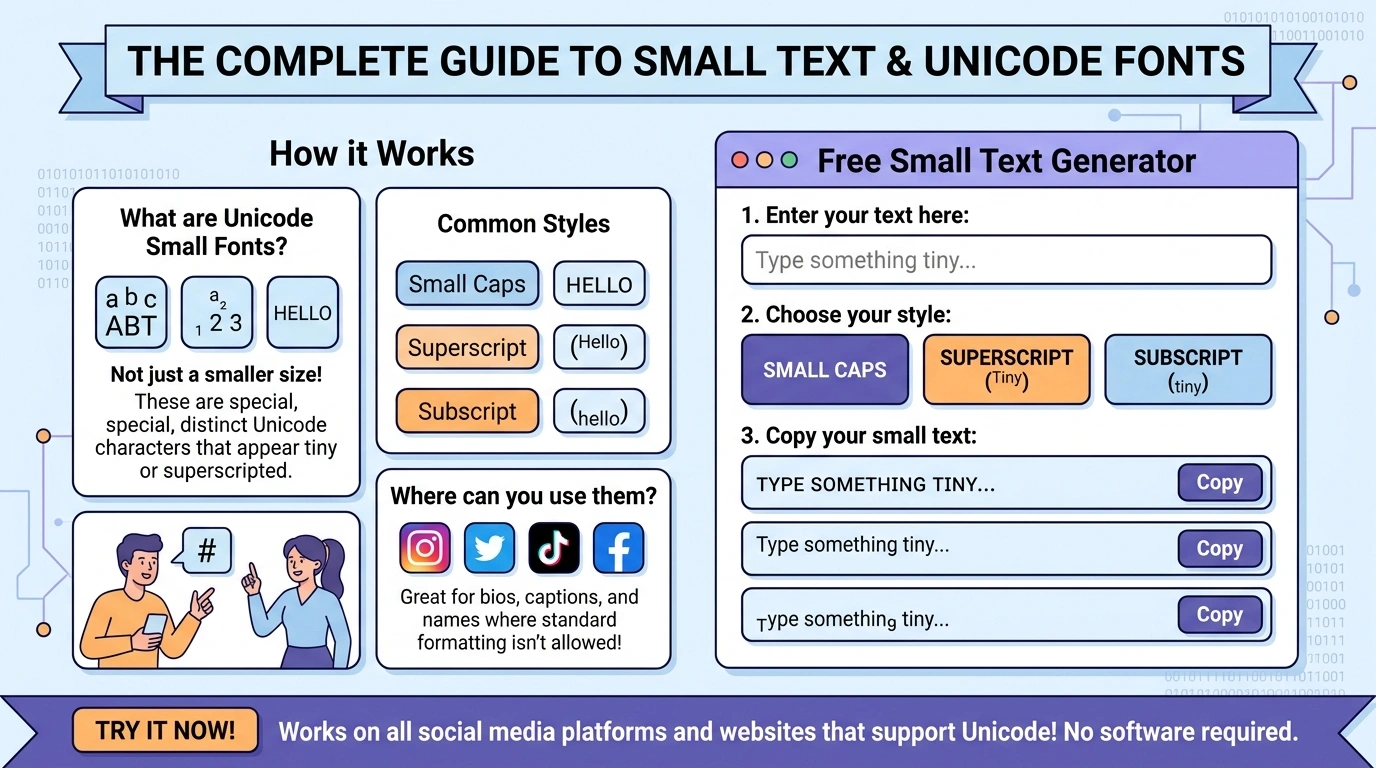
    To truly appreciate a small text generator, it’s crucial to understand that it doesn’t merely change the font size of existing characters. Instead, these tools operate by converting standard alphanumeric characters into their Unicode equivalents that inherently appear smaller or modified. Unicode is an international encoding standard for use with different languages and scripts, by which each letter, digit, or symbol is assigned a unique numeric value that applies across different platforms and programs.

    More Than Just a Font Size Adjustment

    • Superscript and Subscript Characters: Many small text generators primarily utilize Unicode characters from the superscript and subscript blocks. For instance, ‘a’ can become ‘ᵃ’ (U+1D434 MATHEMATICAL SANS-SERIF SMALL A) or ‘₁’ (U+2081 SUBSCRIPT ONE). These are not font styles but distinct characters recognized by the system.
    • Combining Diacritical Marks: Some generators might use combining characters, which are marks that attach to a base character to modify its appearance. While less common for general ‘small text,’ they illustrate Unicode’s versatility.
    • Mathematical Alphanumeric Symbols: Unicode includes a large block of mathematical alphanumeric symbols that feature various script styles, including sans-serif, bold, italic, and indeed, smaller versions of standard letters and numbers. These are frequently employed to create the ‘tiny’ or ‘small caps’ effect.

    This distinction is vital: a small text generator doesn’t apply a CSS style or change your document’s font size. It literally replaces your input with a sequence of different, smaller-looking Unicode characters. This is why the text remains ‘small’ even when copied and pasted into environments that don’t support specific font styling.

    Diverse Applications of Small Text in Professional Contexts

    While often associated with informal social media use, small text generators have legitimate and creative applications in various professional and marketing scenarios when used judiciously.

    Enhancing Social Media Profiles and Posts

    In crowded digital spaces, differentiation is key. Small text can be used to:

    • Craft Unique Bios: A subtly stylized name or a short, impactful phrase in a professional social media bio (e.g., LinkedIn, Instagram) can catch the eye and convey a distinct brand personality without resorting to overly flashy elements. For instance, ‘Founder & CEO‘ could become ‘ᶠᵒᵘⁿᵈᵉʳ & ᶜᴱᴼ’.
    • Add Subtle Emphasis: Within longer posts, small text can highlight a particular word or a short disclaimer without breaking the flow or appearing aggressive. Consider a small, subscripted note for a ‘Limited Time Offer’ or a ‘Terms Apply’ message.
    • Circumvent Character Limits (with caution): In platforms with strict character limits (like older Twitter models for bios), a compact Unicode character might sometimes convey more information in less space, although readability must be prioritized.

    Creative Expression and Artistic Flair

    For brands and individuals in creative industries, small text can be an artistic tool:

    • Branding Elements: Incorporate small text into visual branding, logos, or digital signatures for a unique, handcrafted feel.
    • Event Promotions: Use small text for dates, times, or specific event details in promotional graphics or social media captions to add a touch of elegance or intrigue.

    Subtle Emphasis and Visual Hierarchy

    In design and content presentation, small text can guide the reader’s eye without being overtly dominant:

    • Footnotes and Annotations: In digital documents, presentations, or web content, small text can visually differentiate footnotes, sources, or minor annotations from the main body text, improving readability and organization.
    • Disclaimers and Legal Text: While full legal text should always be accessible, a very brief, non-critical disclaimer or copyright notice can sometimes be rendered in small text to maintain visual cleanliness.

    Unique Usernames and Gaming Tags

    For online communities and gaming, small text offers a way to create memorable and distinctive handles, adding a layer of personalization.

    Benefits of Incorporating Small Text

    When used thoughtfully, small text generators offer several advantages:

    • Aesthetic Appeal and Novelty: It breaks the monotony of standard typography, offering a fresh visual element that can make content more engaging and memorable.
    • Adding Personality and Brand Distinction: For brands aiming for a unique voice, small text can contribute to a recognizable stylistic signature.
    • Visual Differentiation: It helps to create a visual hierarchy, making certain parts of the text stand out or recede gracefully.

    Critical Considerations and Limitations

    Despite its creative potential, the use of small text is not without significant drawbacks and ethical considerations that professionals must heed.

    Accessibility Challenges for Screen Readers

    This is arguably the most critical limitation. Screen readers, used by individuals with visual impairments, often struggle to correctly interpret or pronounce Unicode characters that are outside the standard ASCII range or are designed for specific mathematical or linguistic contexts. What appears as ‘small text’ to a sighted user might be read aloud as a series of unrelated symbols, a blank space, or simply incomprehensible gibberish by a screen reader. This significantly hinders accessibility and excludes a segment of your audience.

    Readability Issues Across Devices and Browsers

    The inherent smallness of these characters can make them difficult to read for anyone, regardless of visual impairment, especially on smaller screens (mobile devices) or for users with less-than-perfect vision. Furthermore, not all fonts or operating systems render all Unicode characters identically, leading to potential display inconsistencies or even missing characters (boxes or question marks) across different platforms.

    Potential Negative SEO Implications (Misuse)

    Search engines generally prioritize clear, readable content. While a judicious use of small text in a social media bio won’t likely impact your SEO, extensively using it within core website content, article titles, or important headers could be problematic. Search engine algorithms might misinterpret the characters, struggle to index them correctly, or, in extreme cases, view it as an attempt to obscure content, potentially leading to lower rankings.

    Professionalism and Contextual Appropriateness

    In formal communications, academic papers, legal documents, or corporate websites, using small text can detract from a professional image. It can be perceived as informal, unserious, or even childish. Always consider your audience and the context of your communication.

    Cross-Platform Compatibility and Rendering

    As mentioned, not all Unicode characters render perfectly on every device, operating system, or browser. What looks great on your desktop might appear broken or unreadable on an older mobile phone or a niche browser. This inconsistency can undermine your message and user experience.

    Best Practices for Using Small Text Generators

    To harness the creative power of small text while mitigating its risks, adhere to these professional guidelines:

    1. Strategic and Minimalist Application: Use small text sparingly and for specific, non-critical elements. It should enhance, not replace, standard text. Think of it as a seasoning, not the main ingredient.
    2. Prioritizing Accessibility: Provide Alternatives: For any critical information conveyed in small text, always provide a standard, accessible alternative. If used in a social media bio, ensure your main profile description is in standard text. Avoid using it for calls to action, important instructions, or core content.
    3. Testing Across Platforms and Devices: Before deploying small text widely, test how it appears on various browsers, operating systems, and mobile devices to ensure consistent rendering and readability.
    4. Understanding Your Audience and Purpose: Evaluate if small text aligns with your brand’s voice and your audience’s expectations. Is it adding value or just a gimmick?
    5. Choosing the Right Style for the Message: Different generators offer various ‘small’ styles (superscript, subscript, tiny caps). Select one that best fits the aesthetic you’re aiming for without sacrificing legibility.

    Practical Examples and Use Cases

    Social Media Bio Enhancement

    Instead of: Digital Marketing Specialist | SEO & Content Strategist

    Consider: ᴰⁱᵍⁱᵗᵃˡ ᴹᵃʳᵏᵉᵗⁱⁿᵍ ˢᵖᵉᶜⁱᵃˡⁱˢᵗ | ˢᴱᴼ & ᶜᵒⁿᵗᵉⁿᵗ ˢᵗʳᵃᵗᵉᵍⁱˢᵗ (subtle superscript for a unique touch)

    Adding a Creative Touch to Captions

    Instead of: New product launch! Details below.

    Consider: New product launch! ᵈᵉᵗᵃⁱˡˢ ᵇᵉˡᵒʷ. (drawing attention to the details in a soft way)

    Subtle Disclaimers or Footnotes

    Instead of: Offer valid for a limited time. See terms.

    Consider: Offer valid for a limited time. ˢᵉᵉ ᵗᵉʳᵐˢ. (making the disclaimer less intrusive visually)

    Unique Brand Messaging

    Instead of: Innovating for Tomorrow

    Consider: ᴵⁿⁿᵒᵛᵃᵗⁱⁿᵍ ᶠᵒʳ ᵀᵒᵐᵒʳʳᵒʷ (a refined, distinct brand slogan in a graphic)

    Key Takeaways

    • Small text generators convert standard characters into unique Unicode equivalents, not just smaller fonts.
    • They offer aesthetic benefits and can enhance social media presence or creative branding when used strategically.
    • Critical limitations include significant accessibility issues for screen readers, potential readability problems, and risks to SEO if misused.
    • Professionals should prioritize accessibility, test extensively, and use small text minimally and contextually.
    • Always consider your audience and the formality of your communication before deploying small text.

    Frequently Asked Questions

    What is a small text generator?

    A small text generator is an online tool that converts regular alphanumeric characters into smaller, often superscript or subscript, Unicode characters. It doesn't change the font size but rather replaces standard characters with unique Unicode symbols that inherently appear smaller.

    Is small text accessible for everyone?

    No, small text generated using Unicode characters often poses significant accessibility challenges. Screen readers, used by visually impaired individuals, may struggle to interpret these characters correctly, rendering them as unintelligible symbols or skipping them entirely. Additionally, the small size can be difficult for many users to read on various devices.

    Can using small text negatively impact my SEO?

    While minor, strategic use in social media bios might not have a direct SEO impact, extensive or inappropriate use of small text within core website content, headings, or important calls to action can be detrimental. Search engines prioritize clear, readable content, and misinterpreting these characters could potentially lead to lower rankings or indexing issues.

    Where is it appropriate to use small text professionally?

    Professionally, small text can be used sparingly for aesthetic enhancement in social media bios, creative branding elements, subtle annotations or footnotes in presentations, or very minor disclaimers where readability is not paramount and an accessible alternative exists. It should generally be avoided for critical information, formal documents, or core website content.

    Are there different styles of small text?

    Yes, depending on the generator and the Unicode blocks it utilizes, you can find various styles such as superscript, subscript, tiny caps (small capital letters), and sometimes even circled or bubble text. Each style uses different sets of Unicode characters to achieve its unique appearance.
  • 10 Creative Ways to Use Small Text on Social Media in 2026

    10 Creative Ways to Use Small Text on Social Media in 2026

    Social media is more crowded than ever. In 2026, the average user scrolls through hundreds of posts, profiles, and stories every single day — and most of that content blends together into a forgettable blur. Standing out is no longer optional; it is the difference between being seen and being ignored. One of the most underused yet highly effective tools for visual differentiation? Small text.

    Small text — the tiny Unicode characters you can generate for free at Small Text Generator — has quietly become one of the most popular personalisation tricks used by influencers, brands, gamers, and everyday creators across Instagram, Twitter, Discord, TikTok, YouTube, and beyond. In this article, we explore 10 creative, practical, and proven ways to use a free small text generator to elevate your social media presence in 2026.

    All examples in this article were created using Small Text Generator — a free online tiny text generator that converts your text into 10 unique Unicode styles instantly, with no signup required.

    Why Small Text Works on Social Media

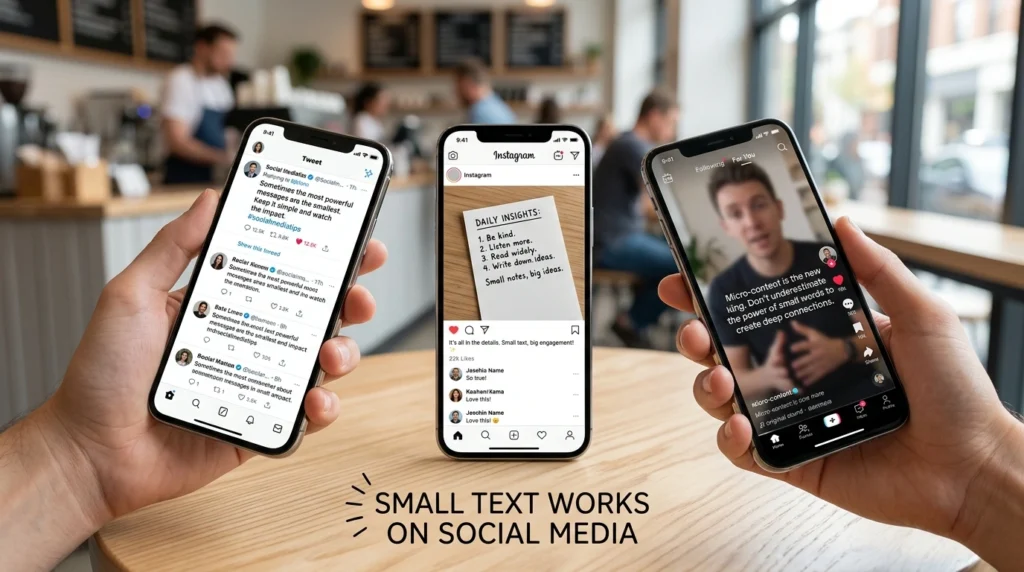
    Small Text Works on Social Media

    Before we dive into the strategies, it is worth understanding the psychology behind why small text captures attention. According to multiple studies on visual processing, the human eye is naturally drawn to pattern interruption — elements that break the expected visual rhythm of a page or feed. Small text does exactly that. When every other post uses standard typography, a bio or caption written in superscript, cursive, or Gothic Unicode characters immediately registers as different and therefore more memorable.

    Additionally, small text signals effort and intentionality. Profiles that use aesthetic Unicode styling send a subconscious message that the creator pays attention to detail — which increases perceived credibility and professionalism, even in casual contexts. Let us now look at how to put this into practice.

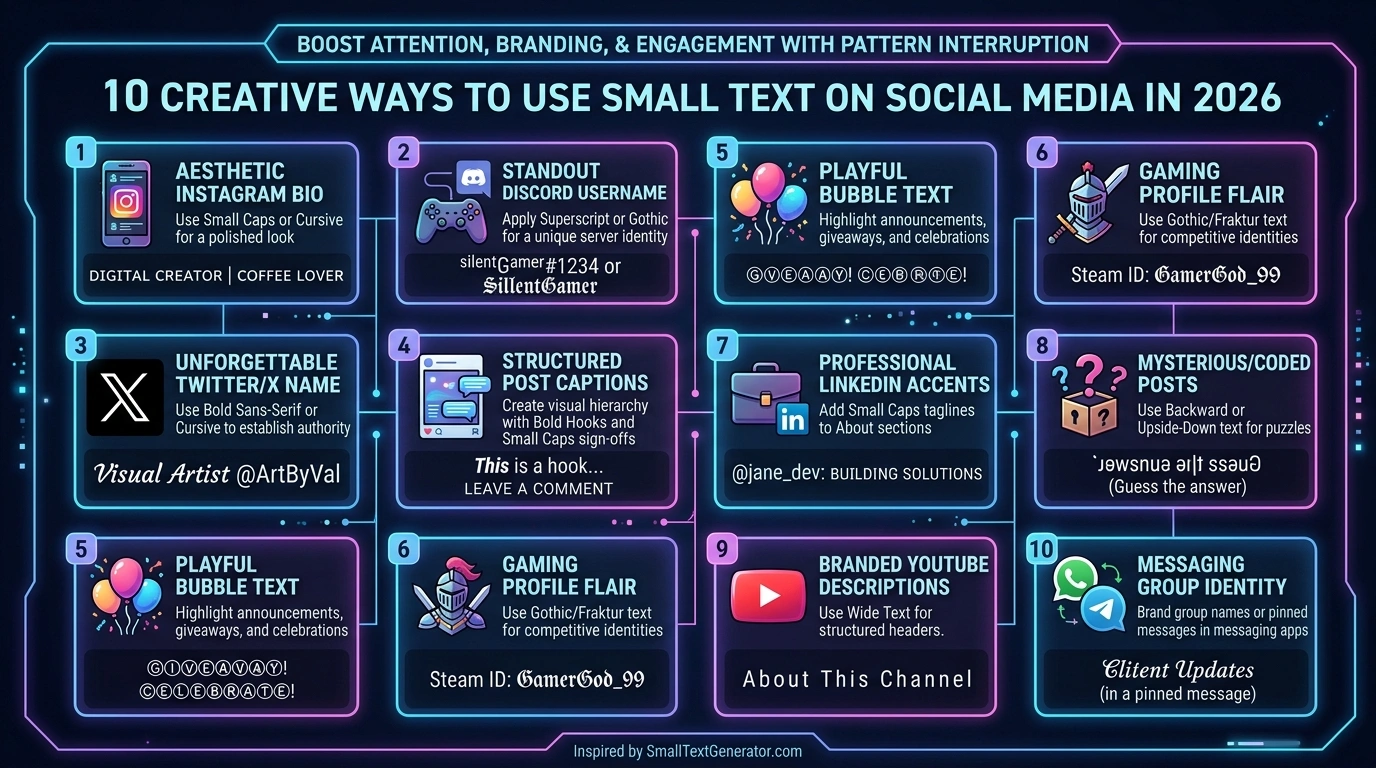
    1. Write an Aesthetic Instagram Bio Using Small Caps or Cursive

    Your Instagram bio is the single most visible piece of text on your profile. It is what potential followers read in the first three seconds before deciding whether to tap Follow. Yet most bios are written in plain, default text — a massive missed opportunity.

    Using our free small text generator, you can write your bio in Small Caps for a polished, editorial feel, or in Cursive for a soft, romantic aesthetic. Here is an example:

    Plain bio:  Digital creator | Coffee lover | Based in London

    Small Caps bio:  ᴅɪɢɪᴛᴀʟ ᴄʀᴇᴀᴛᴏʀ | ᴄᴏꜰꜰᴇᴇ ʟᴏᴠᴇʀ | ʙᴀsᴇᴅ ɪɴ ʟᴏɴᴅᴏɴ

    Cursive bio:  𝒟𝒾𝑔𝒾𝓉𝒶𝓁 𝒸𝓇𝑒𝒶𝓉ℴ𝓇 | 𝒞ℴ𝒻𝒻𝑒𝑒 𝓁ℴ𝓋𝑒𝓇 | 𝐵𝒶𝓈𝑒𝒹 𝒾𝓃 𝐿ℴ𝓃𝒹ℴ𝓃

    The content is identical — but the second and third versions communicate personality and visual style before a single word is consciously read. Head to Small Text Generator, paste your bio, choose your style, and copy the result directly into Instagram’s bio field.

    2. Create a Standout Discord Username or Server Nickname

    Discord has over 500 million registered users as of 2026, and the competition for memorable usernames is fierce. Most names are plain strings of letters and numbers. Using a free tiny text generator, you can set your nickname in any server to something visually unique — without violating Discord’s username policies, because you are using valid Unicode characters, not special symbols or emojis.

    Popular Discord small text strategies include:

    • Using superscript for a delicate, floating-letters effect: ˢⁱˡᵉⁿᵗGᵃᵐᵉʳ
    • Using Gothic for an intense, dramatic username: 𝔖𝔦𝔩𝔢𝔫𝔱𝔊𝔞𝔪𝔢𝔯
    • Using Small Caps for a clean, professional server display name: ꜱɪʟᴇɴᴛ ɢᴀᴍᴇʀ

    Server owners also use small text in channel names, topic descriptions, and welcome messages to create a more immersive, themed atmosphere for their communities.

    3. Make Your Twitter / X Bio and Display Name Unforgettable

    Twitter’s character limit means every letter counts, yet aesthetics matter more than ever as the platform has evolved into a space where personal branding is as important as the content itself. Your display name (the bold name above your @handle) is one of the first things a visitor sees — and it can be written in any Unicode style using Small Text Generator.

    Creators in niches like tech, finance, wellness, and lifestyle have found that using Bold Sans-Serif for display names creates an impression of authority and confidence without being visually aggressive. Smaller creators in the arts, fashion, and creative writing communities tend to favour Cursive or Small Caps for a more personal, handcrafted feel.

    Beyond the display name, Twitter bios written with a mix of regular text and small Unicode accents — a superscript here, a small caps line there — consistently receive higher engagement because they look curated rather than default.

    4. Design Aesthetic Captions for Instagram and TikTok Posts

    Captions are where most creators spend the least creative energy, yet they are read by a significant portion of engaged followers. A caption that uses small text strategically can dramatically improve readability and perceived quality.

    One highly effective technique is using Bold Sans-Serif Unicode for your opening hook line, followed by normal text for the body of your caption, then a small caps or cursive sign-off. This creates a visual hierarchy within the caption itself — guiding the eye through the content in a structured way.

    Example caption structure:

    Hook (Bold Unicode):  𝗧𝗵𝗶𝘀 𝗺𝗼𝗿𝗻𝗶𝗻𝗴 𝗰𝗵𝗮𝗻𝗴𝗲𝗱 𝗲𝘃𝗲𝗿𝘆𝘁𝗵𝗶𝗻𝗴.

    Body (normal text):  I have been waking up at 5am for 30 days straight. Here is what actually happened to my productivity, my mood, and my creative output…

    Sign-off (Small Caps):  — ʟᴇᴀᴠᴇ ᴀ ᴄᴏᴍᴍᴇɴᴛ ɪꜰ ʏᴏᴜ ᴡᴀɴᴛ ᴛʜᴇ ꜰᴜʟʟ ʙʀᴇᴀᴋᴅᴏᴡɴ

    This format respects the reader’s attention while adding enough visual variety to maintain engagement throughout the caption.

    5. Use Bubble Text for Fun and Playful Social Posts

    Not every piece of content needs to be serious or sophisticated. Bubble text — the circled-letter Unicode style (ⓛⓘⓚⓔ ⓣⓗⓘⓢ) — is one of the most instantly recognisable and joyful styles available in any free small text generator. It works brilliantly for:

    • Announcing giveaways or competitions where you want the post to feel celebratory
    • Highlighting fun facts or trivia in an educational post
    • Creating a playful, welcoming tone in community management replies
    • Birthday shoutouts, congratulations posts, and milestone announcements
    • Children’s content creators who want to match their brand’s visual energy

    The key with bubble text is contrast — pair it with a clean, minimal background or a simple photo so the characters can breathe and be read clearly.

    6. Level Up Gaming Profiles With Gothic or Superscript Text

    The gaming community has long been one of the most creative users of Unicode small text. Platforms like Steam, PlayStation Network, Xbox Live, and Twitch all support Unicode to varying degrees in profile names, about sections, and descriptions.

    Gothic (Fraktur) text has become a signature style in gaming aesthetics — particularly in competitive gaming, dark fantasy communities, and music subcultures that overlap with gaming. A Gothic username signals that its owner is serious, experienced, and has an identity beyond just their gameplay.

    Superscript text, on the other hand, is popular among players who want something delicate and hard-to-replicate — it looks like no other username in a lobby, and that uniqueness has genuine social value in communities where identity and reputation matter.

    Visit Small Text Generator, type your gaming alias, and try the Gothic and Superscript styles side by side. Most gamers find their perfect identity style within 30 seconds.

    7. Add a Professional Touch to LinkedIn With Small Caps

    LinkedIn might seem like an unlikely platform for Unicode text styling, but Small Caps specifically has found a legitimate home there. Small caps produce text that looks like carefully chosen typography — professional, considered, and distinctive — without triggering the ‘trying too hard’ reaction that more dramatic styles might.

    Effective LinkedIn uses for small caps include:

    • The opening tagline of your About section — ‘ʙᴜɪʟᴅɪɴɢ ᴅɪɢɪᴛᴀʟ ᴘʀᴏᴅᴜᴄᴛs ᴛʜᴀᴛ ᴍᴀᴛᴛᴇʀ’
    • Section dividers within long About text — a short line in small caps acts as a visual break
    • Featured post descriptions where you want certain phrases to stand out

    Always test LinkedIn compatibility by viewing your profile after editing — some fields may render Unicode differently depending on the device.

    8. Write Mysterious or Coded Content With Backward or Upside Down Text

    Engagement is the currency of social media, and few things drive engagement faster than a piece of content that makes people stop and think. Backward and Upside Down text from our tiny text generator are perfect for this.

    Backward text — which simply reverses the order of characters — can be used as a puzzle, a teaser, or a cryptic message that invites followers to decode it in the comments. ‘ɹǝʍsuɐ ǝɥʇ ɹoꜰ ǝʇoʌ’ (Vote for the answer) rendered upside down creates a post format that is instantly shareable because it is interactive.

    Content creators who run regular engagement posts, polls, and community challenges can use these styles to make their calls-to-action feel like mini games rather than demands — dramatically increasing participation rates.

    9. Brand Your YouTube Channel Description With Wide Text Accents

    YouTube channel descriptions are often overlooked despite being indexed by Google and displayed prominently on channel pages. Adding Wide Text (full-width Unicode characters) as section headers within your description creates a structured, visually interesting layout that stands out compared to channels that use plain text descriptions.

    Example channel description structure:

    About This Channel  We create weekly videos on personal finance, productivity, and building income online.

    Upload Schedule  Every Tuesday and Friday at 8PM GMT.

    Collaborations  For business enquiries, contact us via our website.

    Wide text section headers are readable, distinctive, and create a sense of professional organisation that reflects well on the channel’s overall quality.

    10. Use Small Text in WhatsApp and Telegram for Group Identity

    Community management on messaging platforms is an often-overlooked area of social media strategy. Whether you are running a brand community, a coaching group, or a friend group, using small text in group names, descriptions, pinned messages, and bot auto-replies adds a layer of visual identity that makes the community feel more curated and intentional.

    For brand communities on WhatsApp or Telegram, using your brand name in small caps or cursive in every pinned announcement reinforces brand recognition. For coaching or educational groups, using bold Unicode for key terms in summary messages helps students identify important concepts at a glance.

    Bonus: Combine Multiple Styles for Maximum Impact

    The most sophisticated users of small text do not stick to one style — they combine styles strategically within a single piece of content. A common and effective pattern is:

    • Primary heading or name in Bold Sans-Serif or Small Caps
    • Tagline or secondary descriptor in Cursive or Superscript
    • Category labels or section markers in Gothic
    • Call-to-action in Bubble text for maximum visual attention

    Small Text Generator shows you all 10 styles simultaneously for any text you enter, making it easy to identify which combination works best for your specific content and brand voice.

    Frequently Asked Questions

    Do these small text styles work on all social media platforms in 2026?

    Yes — the vast majority of major platforms including Instagram, Twitter/X, Discord, TikTok, YouTube, Facebook, Reddit, WhatsApp, and Telegram all support Unicode characters, which is what our free small text generator produces. Compatibility is extremely high in 2026 as Unicode support has become a baseline requirement for all modern platforms. We always recommend pasting and previewing your text before publishing to catch any platform-specific rendering differences.

    Will using small text get my account flagged or banned on social media?

    No. Unicode characters — including all 10 styles produced by Small Text Generator are completely legitimate, standard text characters defined by the global Unicode Standard. They are not exploits, hacks, or special symbols. Platforms cannot ban you for using standard Unicode characters any more than they could ban you for using the letter ‘A’. Unicode small text has been used on major platforms for over a decade without any policy issues.

    How do I use Small Text Generator on my phone?

    Simply open Small Text Generator in your mobile browser (Chrome, Safari, Firefox, or any other). The site is fully responsive and optimised for mobile use. Type or paste your text into the input field, then tap the Copy button next to your preferred style. The text is copied to your clipboard and can be pasted directly into any app on your phone — Instagram, Twitter, Discord, and so on.

    Can I use multiple small text styles in the same post or bio?

    Absolutely — and this is actually one of the most effective techniques for creating visual hierarchy. For example, you can use Small Caps for your name, Superscript for your tagline, and normal text for the body of your bio. Since Small Text Generator converts your text into Unicode characters, you can mix and match styles by copying individual lines from different style cards and combining them in your text editor before pasting to the platform.

    Is Small Text Generator free forever, or will there be a paid plan?

    Small Text Generator is committed to remaining completely free. Our mission is to give everyone access to creative text tools without financial barriers. There are no plans for a paid tier, a freemium model, or any charges for any feature of the tool. The tool is free, no-signup, and unlimited — today and in the foreseeable future.

    What is the best small text style for a professional social media presence?

    For a professional context, Small Caps is widely considered the most versatile and universally appealing style — it reads clearly, renders consistently across platforms, and communicates sophistication without being difficult to read. Bold Sans-Serif is the second best choice for professional use, as it closely resembles a bold font and feels natural alongside regular text. Avoid styles like Upside Down or Bubble Text in strictly professional contexts, as they are better suited for casual or playful content.

    Does small text affect the readability of my social media content?

    When used in moderation, small text actually enhances readability by creating visual variety and drawing the eye to key information. The challenges arise when entire long-form posts are written in styles like Superscript or Subscript, which can be difficult to read at length. The best practice is to use small text for short, high-impact elements — names, taglines, headings, sign-offs — and keep longer body copy in standard text for maximum readability and accessibility.

    Final Thoughts: Small Text Is One of Social Media’s Best-Kept Secrets

    In a digital landscape where every creator is competing for the same pool of attention, the tools that help you stand out are worth knowing. Small text — powered by the Unicode Standard and made effortlessly accessible through Small Text Generator. is one of the simplest, most versatile, and most underutilised tools available to creators, brands, gamers, and everyday social media users.

    The ten strategies outlined in this article are not theory — they are actively used by some of the most aesthetically refined profiles on every major platform. And the best part is that getting started takes less than 60 seconds. There is nothing to download, no account to create, and no cost involved.

    Visit SmallTextGenerator.it.com today, type your first line of text, and discover which of the 10 styles is about to become your signature. Your audience will notice the difference before they even read a single word.

  • What Is Small Text? The Complete Guide to Tiny Unicode Fonts Free Small Text Generator Included

    What Is Small Text? The Complete Guide to Tiny Unicode Fonts Free Small Text Generator Included

    Have you ever scrolled through Instagram and noticed someone with a bio written in tiny, elegant letters letters that look like a completely different font, yet somehow paste perfectly into any app? Or spotted a Discord username with ˢᵘᵖᵉʳˢᶜʳⁱᵖᵗ characters that no standard keyboard can produce? That is the magic of small text, and in this complete guide, we are going to break down exactly what it is, how it works, and how you can start using it today for free using our Small Text Generator at Small Text Generator.

    Small Text Generator is a free, no-signup online tool that converts your normal text into 10 different Unicode styles instantly. No download, no account, no limits.

    What Exactly Is Small Text?

    Small text also called tiny text, mini text, or small font text refers to a collection of special characters defined in the Unicode Standard that visually resemble regular alphabet letters but are much smaller in size or stylistically unique. These include superscript letters, subscript letters, small caps, and other letterform variants that were originally created for mathematical, phonetic, and scientific notation purposes.

    The key insight that most people miss is this: small text characters are NOT fonts. They are individual Unicode characters unique code points assigned in the global Unicode table just like the letter ‘A’ (U+0041) or the emoji ‘😊’ (U+1F60A). This is precisely why you can copy and paste them anywhere, from Instagram bios to Twitter posts to Discord messages, without needing to install any font or plugin.

    When you type the letter ‘a’ and convert it using a free small text generator, you are not changing the font you are replacing that character with a completely different Unicode character that simply looks like a tiny ‘a’. This distinction is crucial and explains why the text survives copy-pasting across platforms where custom fonts would otherwise be stripped away.

    The History and Origin of Unicode Small Characters

    The Unicode Standard is a global computing industry standard maintained by the Unicode Consortium. Its primary goal is to provide a consistent method of encoding, representing, and handling text across different writing systems worldwide. As of Unicode 15.1, the standard defines over 149,000 characters spanning 161 modern and historic scripts.

    Small text characters were not originally designed for aesthetic purposes. Superscript and subscript characters were introduced to support mathematical equations, chemical formulas, and phonetic transcription in the International Phonetic Alphabet (IPA). Small capitals were added to support certain orthographic and typographic conventions in linguistics and formal publishing.

    However, as social media platforms grew and users sought ways to personalize their profiles and posts, these characters were repurposed as a creative tool. The widespread adoption of smartphones and the copy-paste culture of social media turned obscure Unicode blocks into mainstream aesthetic tools giving rise to tools like our free small text generator.

    All 10 Small Text Styles Explained (With Examples)

    10 Small Text Styles

    Our free online small text generator at Small Text Generator supports 10 distinct styles. Here is a detailed breakdown of each:

    1. Small Caps

    Small caps convert your lowercase letters into smaller versions of uppercase letters. The result looks like: ʜᴇʟʟᴏ ᴡᴏʀʟᴅ. This style is popular for elegant social media bios, brand names, and formal-looking captions. It is drawn from Unicode’s collection of modifier letters and phonetic extensions.

    2. Superscript

    Superscript text sits above the normal baseline, like footnote numbers in academic writing. Example: ʰᵉˡˡᵒ ʷᵒʳˡᵈ. It is one of the most popular styles for aesthetic usernames and captions because of its delicate, airy appearance. Not every letter in the Latin alphabet has a Unicode superscript equivalent, so our tiny text generator uses the closest available character for each.

    3. Subscript

    Subscript text sits below the normal baseline. Example: ₕₑₗₗₒ. Used heavily in chemistry (H₂O) and mathematics, subscript has been adopted by social media users for a minimalist, understated aesthetic. Similar to superscript, complete Unicode coverage does not exist for all letters.

    4. Upside Down

    This style flips each character upside down AND reverses the order of the text, producing text that reads correctly when you physically rotate your screen 180 degrees. Example: plɹoʍ ollǝɥ. It is one of the most eye-catching and conversation-starting styles available.

    5. Bubble Text

    Bubble text wraps each character inside a circle: ⓗⓔⓛⓛⓞ ⓦⓞⓡⓛⓓ. It is playful, bold, and immediately stands out in any feed. Uppercase bubble letters use filled circles, adding even more visual weight. This style works great for headings, hashtags, and social media profile names.

    6. Wide Text (Full-Width)

    Wide text uses full-width Unicode characters derived from the CJK (Chinese, Japanese, Korean) computing standards: Hello World. Each character takes up double the normal horizontal space, creating a stretched, retro-digital aesthetic that has become popular in lo-fi and vaporwave social media aesthetics.

    7. Bold Sans-Serif

    This style uses the bold sans-serif mathematical alphabet defined in Unicode’s Mathematical Alphanumeric Symbols block: 𝗛𝗲𝗹𝗹𝗼 𝗪𝗼𝗿𝗹𝗱. It produces clean, heavy text that looks like a bold font but functions as regular paste-able Unicode. Ideal for making key phrases pop in captions or bios.

    8. Cursive / Script

    The cursive style uses the mathematical script alphabet: 𝒽𝑒𝓁𝓁ℴ 𝓌ℴ𝓇𝓁𝒹. It mimics handwritten calligraphy and is one of the most requested styles for wedding-related social posts, fashion brands, and personal bios that want a luxurious feel.

    9. Gothic / Fraktur

    Gothic uses the mathematical Fraktur alphabet: 𝔥𝔢𝔩𝔩𝔬 𝔴𝔬𝔯𝔩𝔡. It replicates the old Germanic blackletter typographic style, now heavily used in music, tattoo culture, sports jerseys, and edgy social media aesthetics.

    10. Backward

    Backward text simply reverses the character order of your input: dlroW olleH. While it does not use special Unicode characters, it is a fun and effective way to create mysterious or coded-looking content, particularly in gaming communities and puzzle posts.

    Where Can You Use Small Text? (Platform Compatibility)

    One of the most common questions we receive at Small Text Generator is: will this actually work where I want to paste it? The short answer is yes almost everywhere. Here is a platform-by-platform breakdown:

    • Instagram: Bios, captions, comments, DMs, and Stories text overlays all support Unicode small text.
    • Twitter / X: Tweets, bios, display names, and replies all render small text correctly.
    • Discord: Usernames, server nicknames, channel topics, and messages fully support all styles.
    • Reddit: Post titles, comments, and flair text all render Unicode characters.
    • TikTok: Bios and comments support Unicode text. Video captions depend on the overlay tool used.
    • YouTube: Channel descriptions, video descriptions, and comments support small Unicode text.
    • Facebook: Posts, comments, About sections, and page descriptions all support Unicode.
    • WhatsApp & Telegram: Messages and status text both render Unicode small text correctly.
    • Gaming Platforms (Steam, PSN, Xbox): Profile names and bios generally support Unicode.
    • Email: Most modern email clients render Unicode text correctly in both subjects and body text.

    Important Note:  Some platforms like LinkedIn occasionally sanitize Unicode characters in certain fields. Always test your text after pasting it to confirm it renders as expected.

    Why Use a Free Small Text Generator Instead of Doing It Manually?

    You could, in theory, look up each individual Unicode character code and manually piece together your tiny text. In practice, this would take hours for a single sentence. A free online small text generator like Small Text Generator does the entire conversion in milliseconds for any length of text, across 10 different styles, simultaneously.

    Here is what makes our tool specifically valuable compared to other tiny text generators online:

    • Real-time conversion: Results appear instantly as you type no button press required.
    • 10 simultaneous styles: See all conversions at once and pick the one that fits your need.
    • Accurate Unicode mapping: We use the correct, platform-verified Unicode characters for each style rather than visual approximations that break on some devices.
    • Clipboard fallback: Our copy function works on both HTTPS and HTTP environments, including older browsers.
    • No limits: Convert a single word or an entire paragraph there is no character or word count cap.
    • Privacy-first: Your text is processed entirely in your browser. Nothing is sent to or stored on our servers.

    Small Text for SEO: What You Need to Know

    If you run a blog or website, you may be wondering whether using small Unicode text in your content can help or hurt your search engine rankings. The answer requires some nuance.

    For social media profiles and posts, small text has no negative SEO impact because social media content is largely not indexed by Google in the traditional sense. In fact, an eye-catching bio written with our free small text generator can increase profile engagement, follower count, and ultimately drive more traffic to your website which indirectly benefits SEO.

    For website content (blog posts, landing pages, product descriptions), we strongly recommend against using Unicode small text in your primary headings or body copy. Search engine crawlers read Unicode characters literally, meaning ‘ʜᴇʟʟᴏ’ is not the same as ‘hello’ in Google’s eyes. Using small text for headings can prevent those pages from ranking for your target keywords.

    The ideal use of small text for website owners is in decorative, non-critical elements visual accents, stylized pull quotes, or UI labels that do not contain target keywords.

    5 Expert Tips for Using Small Text Effectively

    1. Match the style to your brand personality. Gothic suits edgy or music brands. Cursive suits luxury or wellness brands. Bubble suits playful or children’s brands.
    2. Do not overuse it. A single line in small caps is elegant. An entire post in superscript is exhausting to read. Use it to accent, not dominate.
    3. Test on mobile before publishing. Small text characters can render differently across operating systems and font rendering engines, particularly on older Android devices.
    4. Use bold sans-serif for emphasis within normal text. Since bold Unicode text looks like a bold font, it is the most natural-looking option for mixing with regular text.
    5. Save your favourite conversions. Our tool does not store your history, so copy conversions you plan to reuse into a personal note or document.

    Frequently Asked Questions

    Is Small Text Generator completely free to use?

    Yes, absolutely. Small Text Generator is 100% free with no hidden charges, no premium tier, and no subscription required. Every style, every conversion, and every copy is free forever. We believe creative tools should be accessible to everyone, regardless of budget.

    Do I need to create an account to use the free small text generator?

    No account or registration is needed. Simply visit Small Text Generator, type or paste your text into the input box, and all 10 styles are generated in real-time. You can copy any result to your clipboard instantly with a single click.

    Why does superscript not have all 26 letters?

    The Unicode Standard was not designed with complete superscript alphabet coverage in mind it was built incrementally to meet scientific and linguistic needs. As a result, some letters (notably ‘q’ and ‘c’ in their ‘standard’ superscript form) do not have official Unicode equivalents. Our tiny text generator uses the closest available Unicode modifier letter for each missing character to maintain visual consistency.

    Will small text work on every website and app?

    Small text generated by our tool consists of standard Unicode characters, which are supported by all modern operating systems, browsers, and most major platforms including Instagram, Twitter, Discord, Reddit, YouTube, Facebook, WhatsApp, and most gaming platforms. Compatibility is extremely high, though a small number of platforms may strip or misrender certain less-common Unicode characters. We always recommend pasting and previewing before publishing.

    Is my text stored or used by Small Text Generator?

    No. All text conversion happens entirely within your browser using JavaScript. No text you enter is ever transmitted to, logged by, or stored on our servers. Your content remains completely private. This is a core design principle of our tool what you type stays with you.

    Can I use the small text generator on my mobile phone?

    Yes. Small Text Generator is fully responsive and works seamlessly on all screen sizes including smartphones and tablets. The tool has been tested across iOS (Safari) and Android (Chrome) to ensure consistent performance and display on mobile devices.

    What is the difference between small text and a small font?

    A font is a typeface file (like Arial or Times New Roman) that must be installed on a device to render correctly. When you paste text styled with a font into another app, the font does not travel with it only the plain characters do. Small text from our generator uses actual Unicode characters, meaning the ‘style’ is baked into the character itself. This is why tiny text can be pasted anywhere and still look the way it was intended.

    Conclusion: Start Creating With the Best Free Tiny Text Generator

    Small text is one of the simplest, most powerful ways to make your social media presence stand out and it costs nothing. Whether you are building a brand identity with elegant small caps, adding personality to a Discord server with bubble text, or writing a poetic Instagram bio in cursive, the right style can completely transform how your content is perceived.

    Small Text Generator gives you instant access to all 10 styles, completely free, with no registration, no limits, and full privacy. We are continuously improving the tool based on user feedback so if there is a style you want to see added, or something we can improve, we would love to hear from you.

    Head to SmallTextGenerator.it.com right now, type your first line, and see the magic happen in real time. Your next standout bio is one copy-paste away.